

Meals in QuickBooks: Why They Should Be Categorized Carefully
Meals can be confusing for many small business owners.
You may buy lunch with a client, grab food while traveling for work, bring snacks for your team, or pay for food at a company event. At first, it all looks like “meals,” but for bookkeeping and taxes, not every meal is treated the same way.
That is why it is important to separate meal expenses correctly in QuickBooks Online.
Why meal expenses are separated
The main reason meals are separated is because different types of meals may have different tax treatment.
In general, many business meals are only 50% deductible. The IRS explains that business meal deductions are generally limited to 50% of the unreimbursed cost.
Some meals may be 100% deductible, depending on the situation. Others may not be deductible at all.
This does not mean you should ignore the expense. It still happened. It still needs to be recorded. But it should be placed in the correct category so your books are cleaner and your tax preparer has better information at tax time.
Common meal categories small business owners should understand
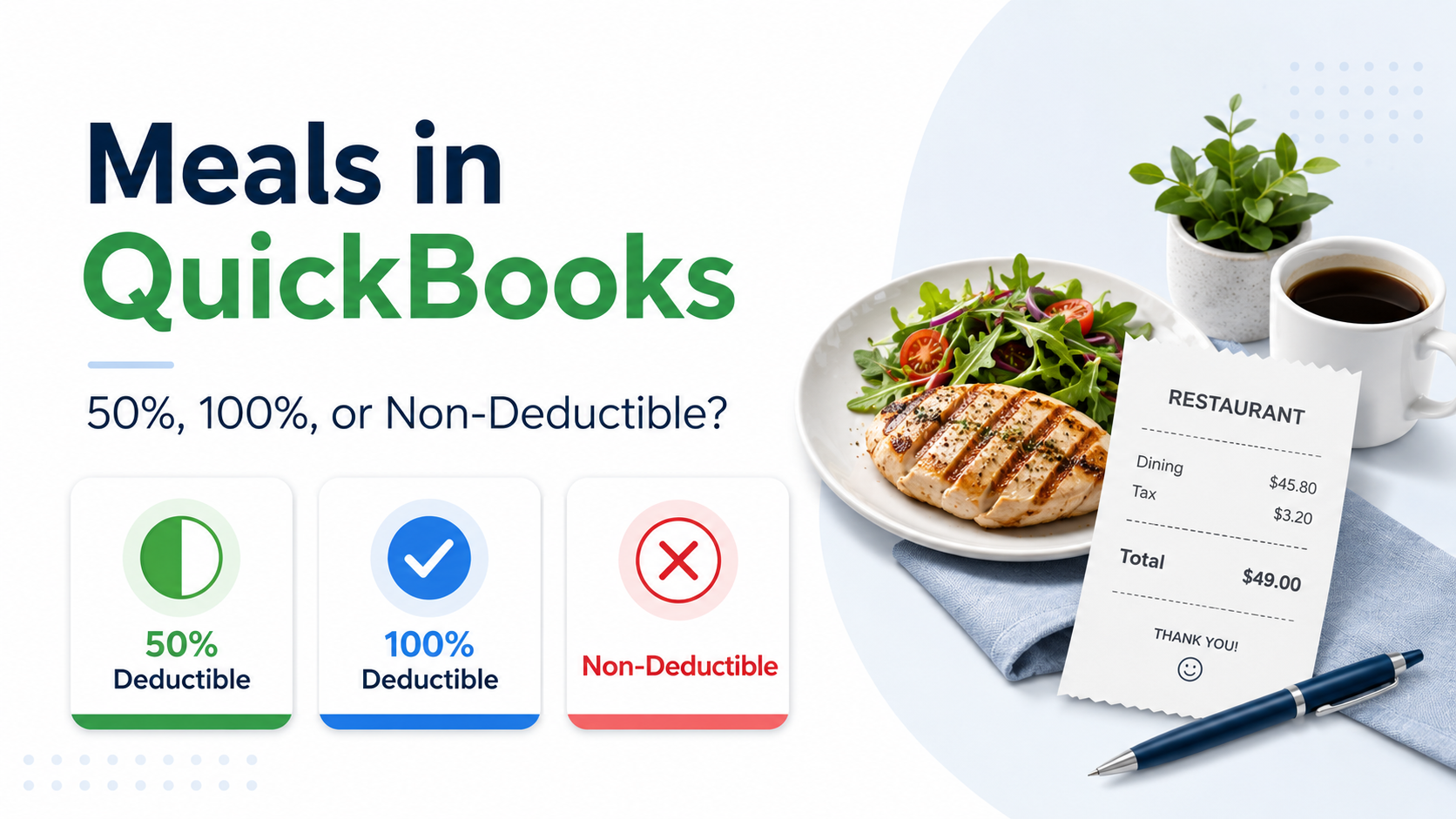
A simple setup may include:
Meals – 50% Deductible
This is usually for ordinary business meals, such as meeting a client, vendor, or business contact over lunch or dinner. The meal should have a clear business purpose.
Example:
You meet a potential client for lunch to discuss services. You pay with your business card. This would usually go under Meals – 50% Deductible.
Meals – 100% Deductible
This may apply to certain meals that benefit employees or are connected to specific business situations, such as a company-wide event or certain employee meals. These rules can be more specific, so it is a good idea to check with your tax professional.
Example:
You provide food for a company holiday party for your team. This may fall under a different category than a regular client lunch.
Meals – Non-Deductible
Some food purchases may not qualify as a business deduction. For example, if you buy lunch for yourself during a normal workday and there is no business meeting or travel involved, that may be personal, not business.
Example:
You stop for lunch alone near your office during a regular workday. Even if you paid with the business card, it may not be a deductible business meal.
What about entertainment?
Meals and entertainment are not the same thing.
Entertainment expenses are generally much more limited. For example, tickets to a game, a show, or another entertainment activity may not be deductible. If food is purchased separately and clearly listed separately, the meal portion may still need to be reviewed separately. IRS Publication 463 explains meals and entertainment rules in more detail.
This is another reason clean bookkeeping matters. If everything is lumped together, it becomes harder to know what really happened.
A simple way to set this up in QuickBooks Online
For many small businesses, it can be helpful to set up meals like this:
Meals
Meals – 50% Deductible
Meals – 100% Deductible
Meals – Non-Deductible
This keeps everything organized under one main “Meals” section while still separating the details.
The parent account, “Meals,” can be used for reporting organization. The subaccounts help show what kind of meal it was. In most cases, the actual transactions should be posted to the correct subaccount, not just the parent account.
This makes your reports easier to read and makes tax time less stressful.
What information should you keep?
When recording meal expenses, do not rely only on the bank feed.
Try to keep notes such as:
Who was there
Why the meal was business-related
The date
The receipt
The business purpose
For example, instead of only recording “Restaurant – $68,” a better note would be:
“Lunch with ABC Landscaping to discuss monthly bookkeeping services.”
That simple note can make a big difference later.
Why this matters
Poor meal categorization can create problems.
Your profit and loss report may look messy. Your tax preparer may need to ask more questions. Some expenses may be treated incorrectly. You may lose time trying to remember what happened months ago.
Good bookkeeping does not have to be complicated. But it does need to be clear.
When meals are categorized properly, you have better records, cleaner reports, and fewer surprises at tax time.
Final thought
If you are using QuickBooks Online, do not put every restaurant charge into one general meals category without thinking about it.
Ask yourself:
Was this truly business-related?
Was it for a client, employee, travel, or personal use?
Should it be 50% deductible, 100% deductible, or non-deductible?
A little organization now can save a lot of confusion later.
At Simon Bookkeeping, we help small business owners keep their books organized, simple, and easier to understand. If you are not sure whether your QuickBooks categories are set up correctly, a bookkeeping review can help you find and fix issues before they become bigger problems.
